RF · Microwave Study
Connecting I/Q, Modulation, Channel, and BER
I separated the digital-communications signal flow from the RF front end, then connected baseband I/Q through carrier, channel, and receiver decisions.
- Sequence
- 10 / 32
- Track
- core
- Tools
- RF calculators
On this page
Question I started with
I separated the digital-communications signal flow from the RF front end, then connected baseband I/Q through carrier, channel, and receiver decisions.
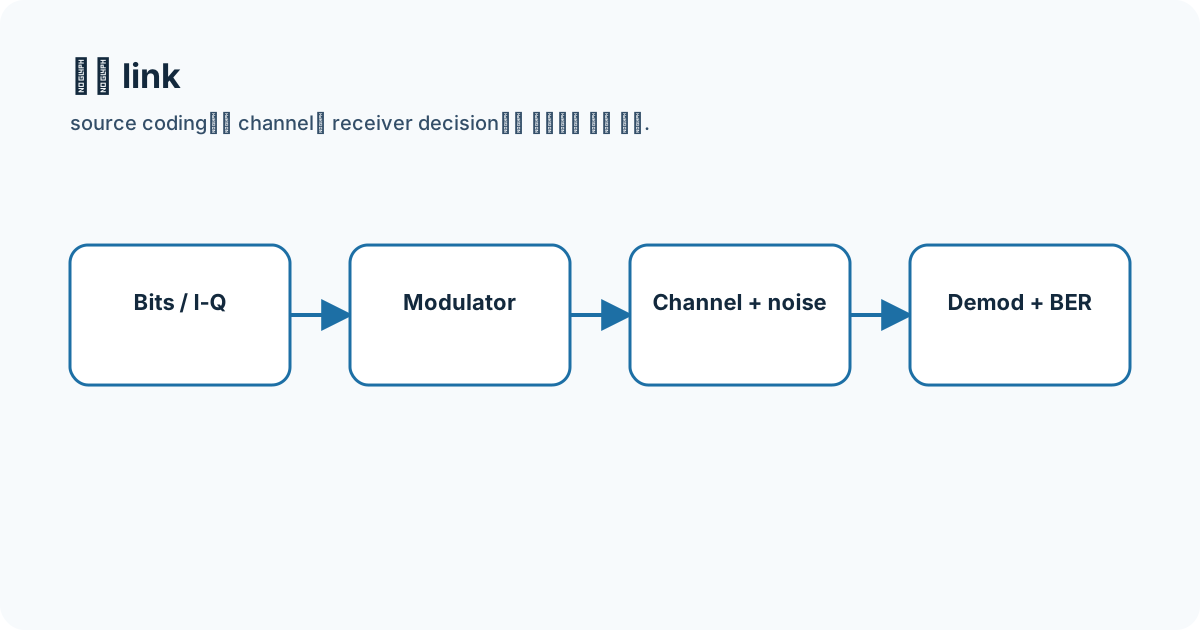
Connecting the concepts
M-ary modulation carries log2(M) bits per symbol, and constellation distance with channel noise influences error probability. RF blocks handle translation and power level without replacing coding and detection.
- I/Q
- QPSK
- channel
- SNR
- BER
Equations and assumptions
I write the reference impedance, units, and linear-versus-decibel domain before substituting numbers.
R_s = R_b / log2(M)SNR_dB = 10 log10(P_s / P_n)Worked example
A 1 Mbps bitstream sent with QPSK has an uncoded symbol rate of 500 ksym/s. With roll-off 0.35, an idealized occupied-bandwidth estimate is about 675 kHz.
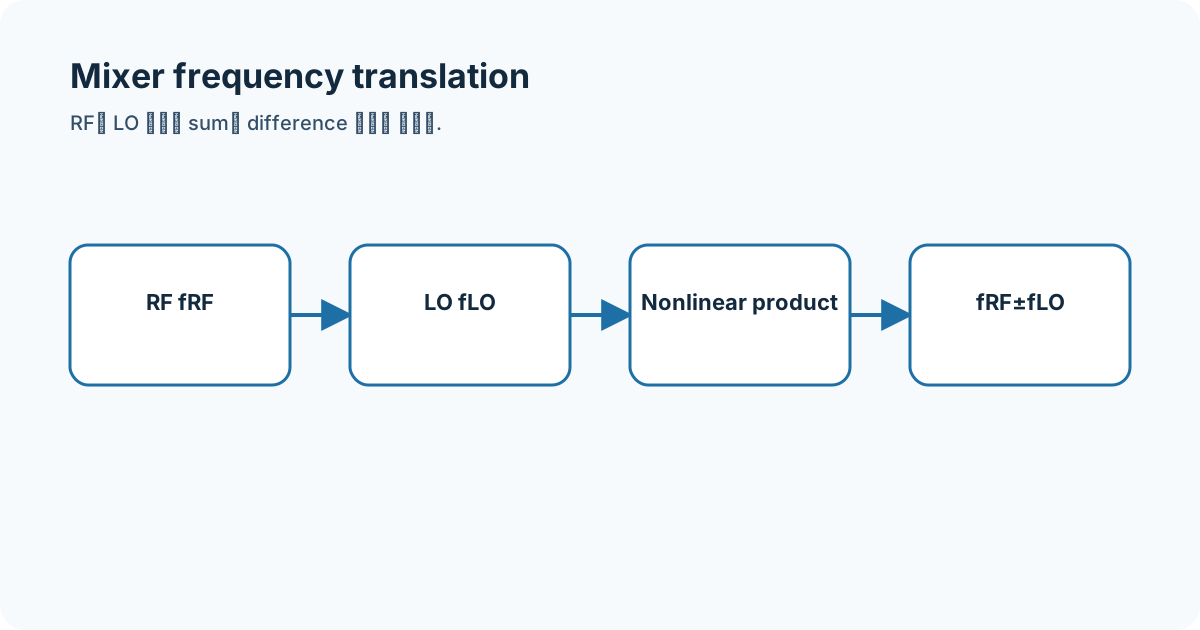
Connecting it to my coursework and projects
I link my digital-communications course pages for modulation, channel, and BER without calling RFDH the course syllabus. FMCW radar I/Q serves a different purpose from communication-symbol decisions.
High-frequency engineering course hub
What I will check next
I do not carry historical security or capacity statements into current standards as absolutes. This page uses the source for signal-flow foundations and leaves current specifications to their standards.