RF · Microwave Study
Re-reading My Microstrip, Matching, Wilkinson, and Branch-Line Work
I placed RFDH concepts beside my actual Cadence coursework screens and separated design equations, entered geometry, and stored markers.
- Sequence
- 11 / 32
- Track
- core
- Tools
- RF calculators
On this page
Question I started with
I placed RFDH concepts beside my actual Cadence coursework screens and separated design equations, entered geometry, and stored markers.
Connecting the concepts
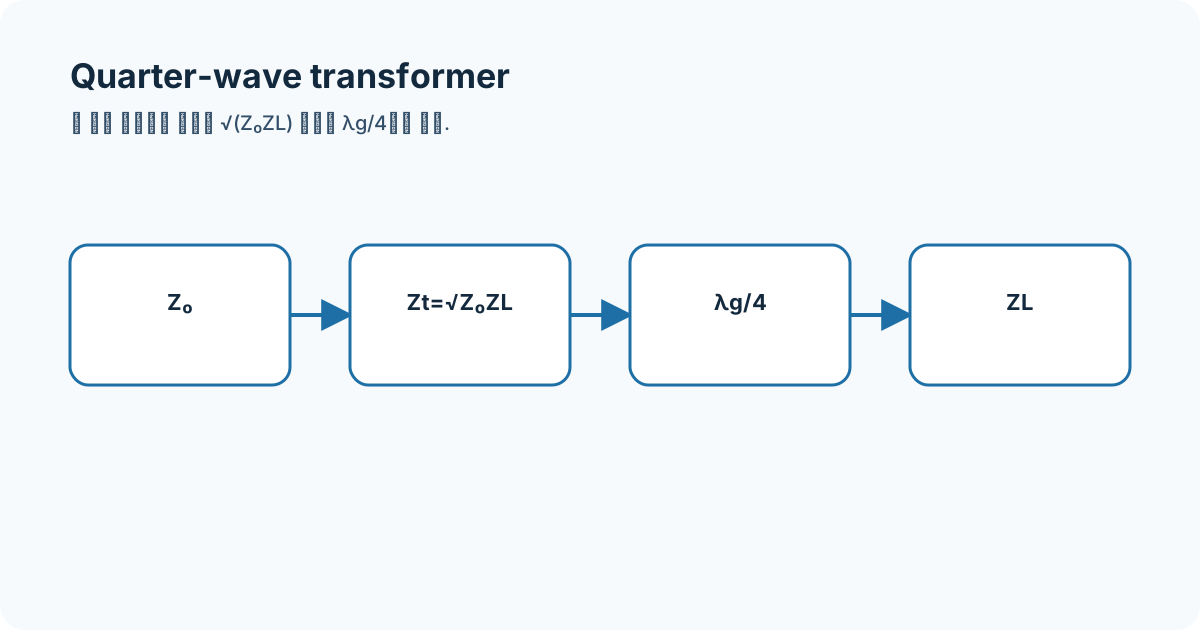
Effective permittivity and guided wavelength set microstrip length, while matching networks move the load toward the reference impedance. Wilkinson and branch-line circuits both use quarter-wave sections but have different port and isolation mechanisms.
- Cadence
- microstrip
- L matching
- Wilkinson
- branch-line
Equations and assumptions
I write the reference impedance, units, and linear-versus-decibel domain before substituting numbers.
l = theta lambda_g / (2 pi)Z_branch = sqrt(2) Z_0 for an equal WilkinsonWorked example
For Z0=50 ohms, an equal Wilkinson uses 70.71-ohm branches and an ideal 100-ohm isolation resistor. My stored design separately shows tuned values and physical line dimensions.
Connecting it to my coursework and projects
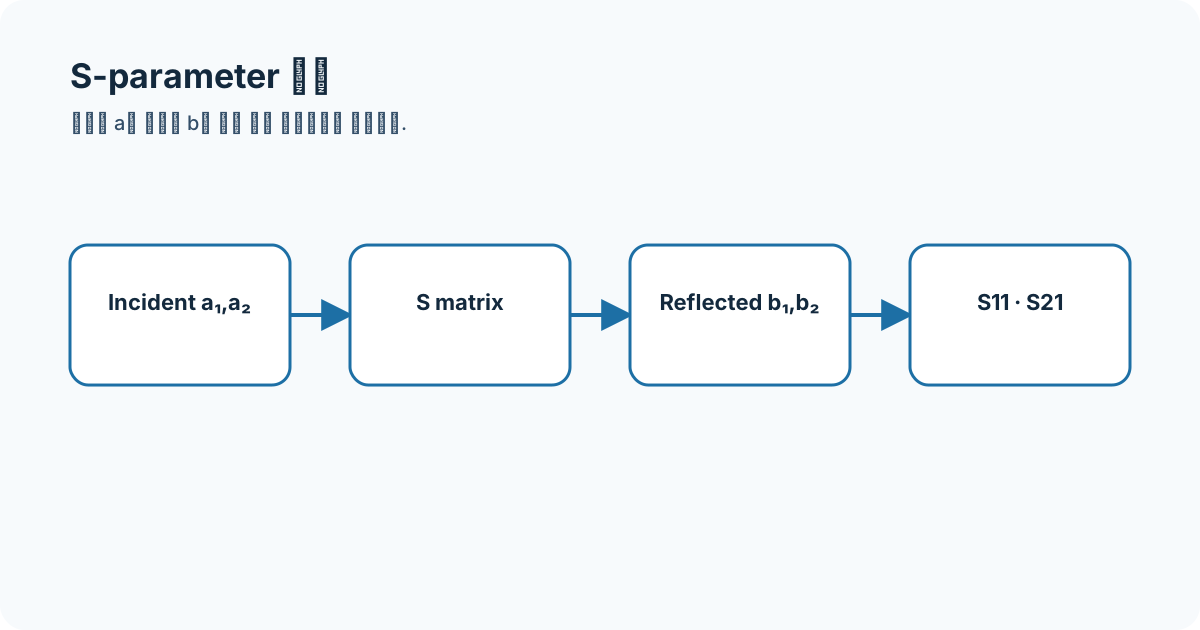
I do not turn the stored 3.7 GHz microstrip marker into exact 3.5 GHz validation. The Wilkinson and branch-line screens remain an existing simulation archive.
High-frequency engineering course hub
What I will check next
Stored screens do not establish phase balance, fabrication tolerance, connector launches, or VNA measurements, and calculator output does not replace those checks.