RF · Microwave Study
Checking dB and dBm Calculations by Hand
I write the reference and unit first to avoid mixing a dB ratio with absolute dBm power.
- Sequence
- 6 / 32
- Track
- core
- Tools
- RF calculators
On this page
Question I started with
I write the reference and unit first to avoid mixing a dB ratio with absolute dBm power.
Connecting the concepts
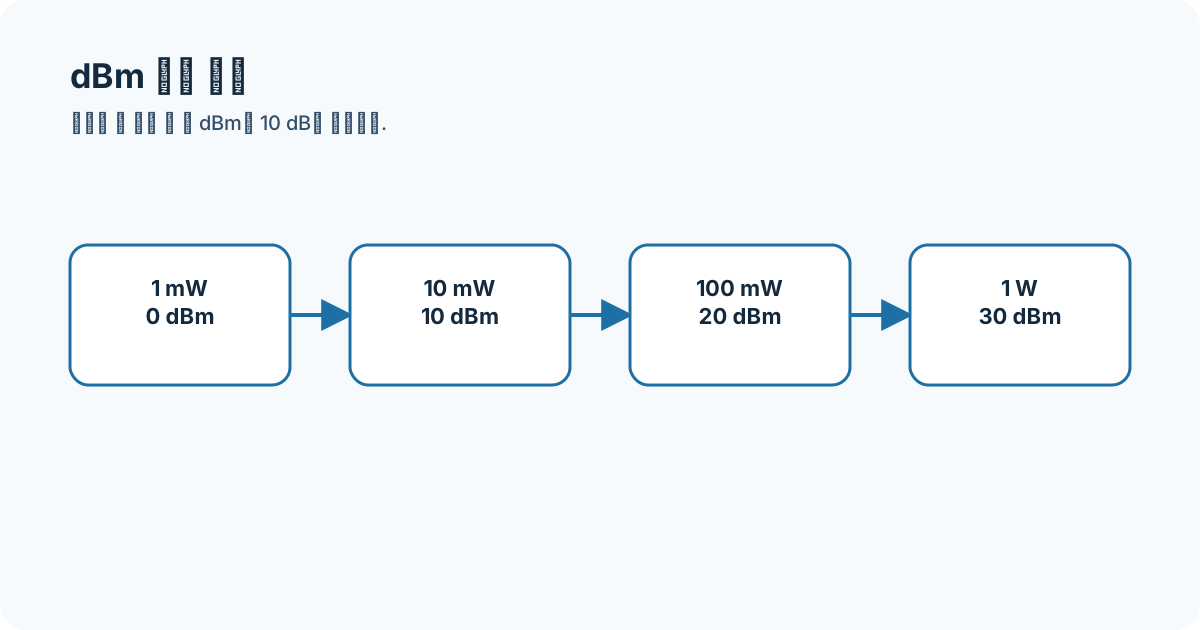
dB is a ratio; dBm is a power level referenced to 1 mW. Adding gains and losses in dB to an input dBm gives an output level, while available power and compression remain separate checks.
- dB
- dBm
- mW
- gain
- loss
Equations and assumptions
I write the reference impedance, units, and linear-versus-decibel domain before substituting numbers.
P_dBm = 10 log10(P_mW)P_mW = 10^(P_dBm / 10)Worked example
−10 dBm is 0.1 mW, 20 dBm is 100 mW, and 30 dBm is 1 W. A 10 dBm signal through 2 dB loss and 12 dB gain becomes 20 dBm under a linear assumption.
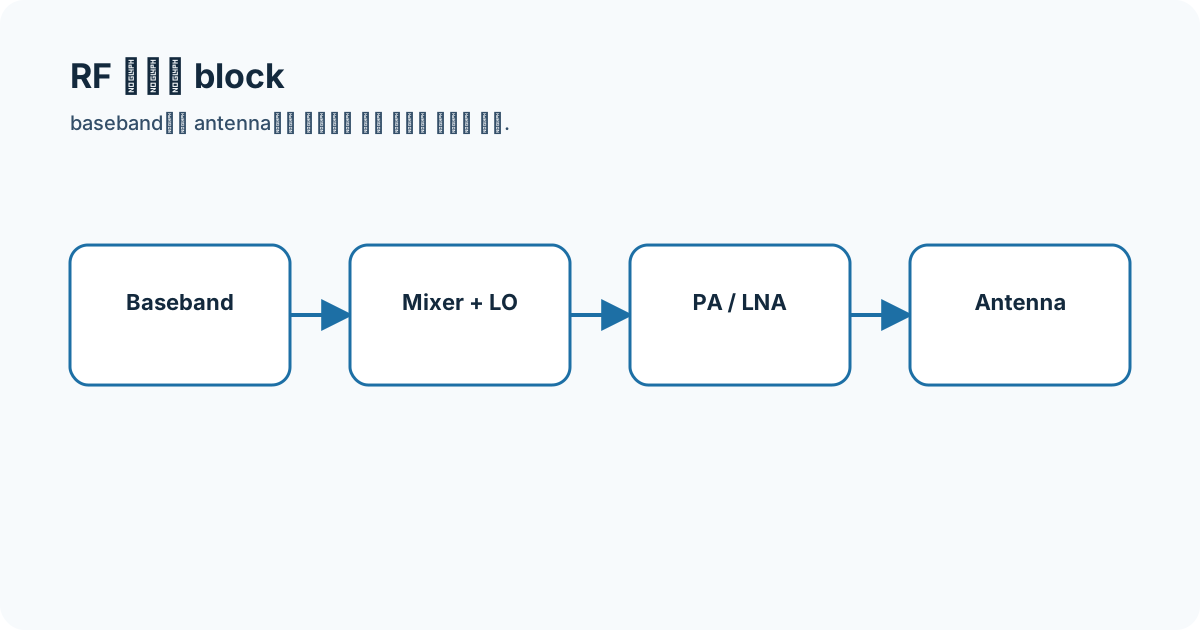
Connecting it to my coursework and projects
A −3 dB S-parameter split is not an absolute output power; input power and the reference conditions are needed before converting to watts or dBm.
High-frequency engineering course hub
What I will check next
I do not use 10 log for voltage ratios or 20 log for power ratios, and I do not equate voltage and power dB without the equal-impedance condition.