Week 10
BER and Error Probability
I use the saved course file to reconnect sampling, baseband transmission, digital modulation, and error-rate analysis.
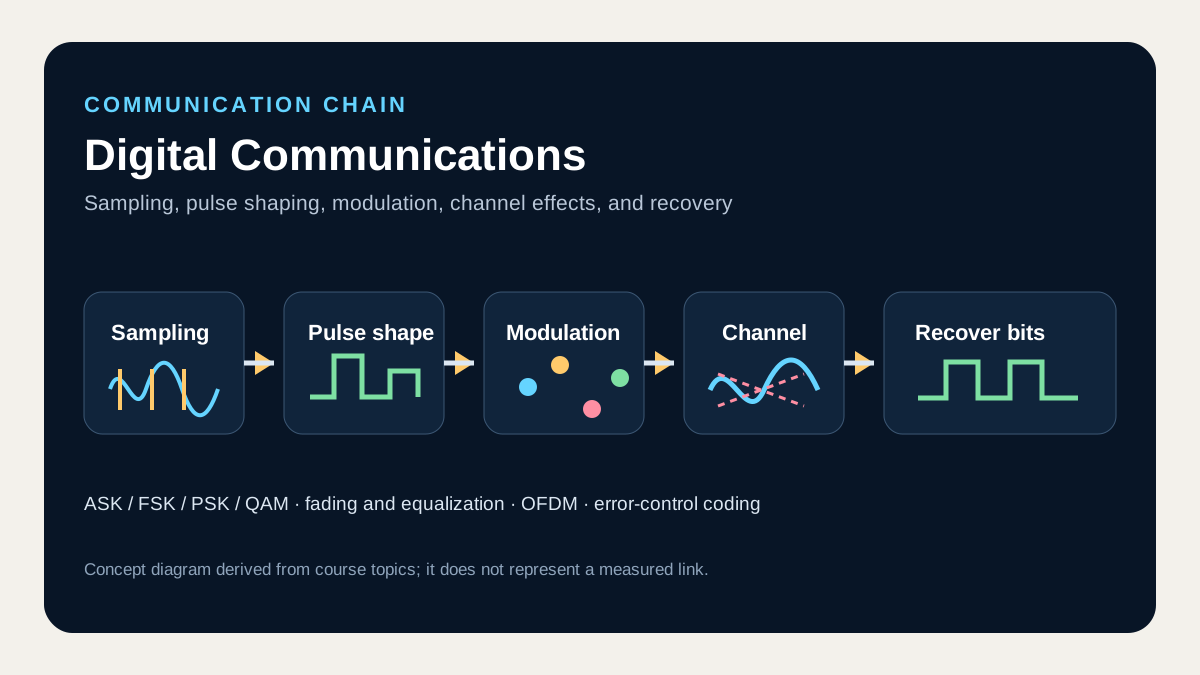
What I connect in this unit
The Q-function gives a Gaussian decision variable tail probability, and Eb/N0 compares bit energy with noise density. A theoretical BER curve is the receiver-model reference, while a Monte Carlo estimate approximates it from observed error events.
Concept map
- Q-function
- Eb/N0
- Theoretical BER
- Monte Carlo estimates
Technical anchor
For coherent BPSK, theoretical BER is Pb = Q(√(2Eb/N0)), and a simulation estimate is BERhat = Nerror/Nbit.
How I review it
Set a target number of errors per Eb/N0 point before defining the bit-generation loop, and mark high-SNR estimates with too few errors as statistically uncertain.
Connection to the full course
Unit 10 of 12. Unit numbers expand topics from the saved file into a concept sequence, not an attendance-week record.