Week 09
QPSK and QAM
I use the saved course file to reconnect sampling, baseband transmission, digital modulation, and error-rate analysis.
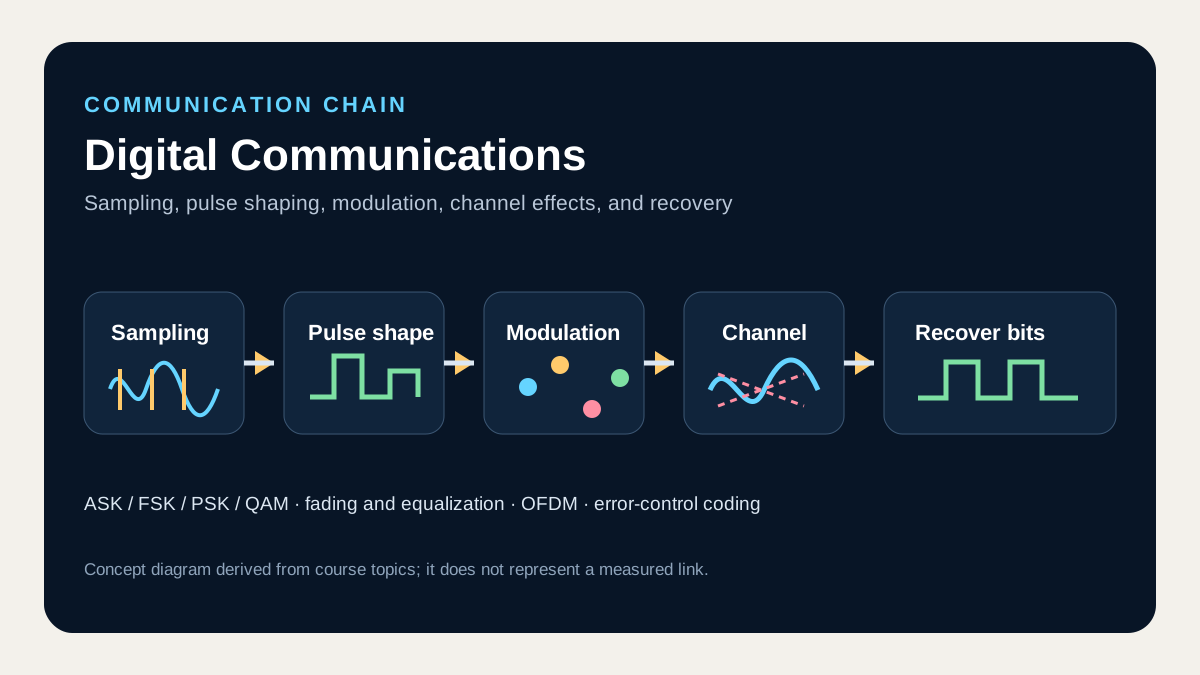
What I connect in this unit
QPSK places two-bit symbols on orthogonal I and Q axes, while QAM adds amplitude levels to carry more bits per symbol. Gray coding makes nearest constellation neighbors differ by one bit, limiting bit errors from a symbol mistake.
Concept map
- I/Q representation
- Symbol mapping
- Gray coding
- Constellation distance
Technical anchor
An M-QAM symbol carries k = log2M bits, so at bit rate Rb the symbol rate is Rs = Rb/k.
How I review it
Draw Gray-coded QPSK and 16-QAM constellations, normalize average energy, and compare nearest-neighbor distances and decision boundaries.
Connection to the full course
Unit 9 of 12. Unit numbers expand topics from the saved file into a concept sequence, not an attendance-week record.