RF · Microwave Study
Starting RF Study: Wavelength and Electrical Length
I started by asking why RF is more than a label for high frequency. When physical size is no longer negligible relative to wavelength, phase and reflection must be tracked along position.
- Sequence
- 1 / 32
- Track
- core
- Tools
- RF calculators
On this page
Question I started with
I started by asking why RF is more than a label for high frequency. When physical size is no longer negligible relative to wavelength, phase and reflection must be tracked along position.
Connecting the concepts
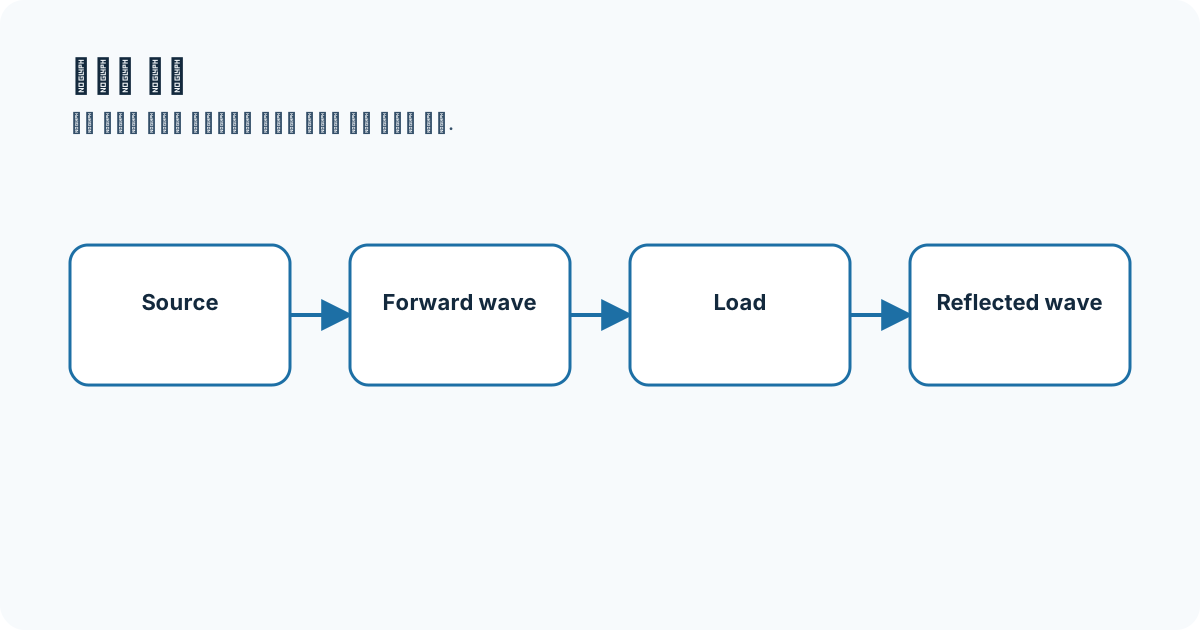
A lumped node can be represented by one voltage, while a distributed line uses V(z) and I(z) as sums of forward and reflected waves. Frequency, phase velocity, and physical length must be recorded before comparing electrical length.
- wavelength
- electrical length
- distributed circuit
- phase velocity
Equations and assumptions
I write the reference impedance, units, and linear-versus-decibel domain before substituting numbers.
lambda = v_p / ftheta = beta l = 2 pi l / lambdaWorked example
At 3.5 GHz the free-space wavelength is about 85.7 mm. With an assumed effective permittivity of 6, the guided wavelength is about 35.0 mm, so a 25 mm line is roughly 257 electrical degrees.
Connecting it to my coursework and projects
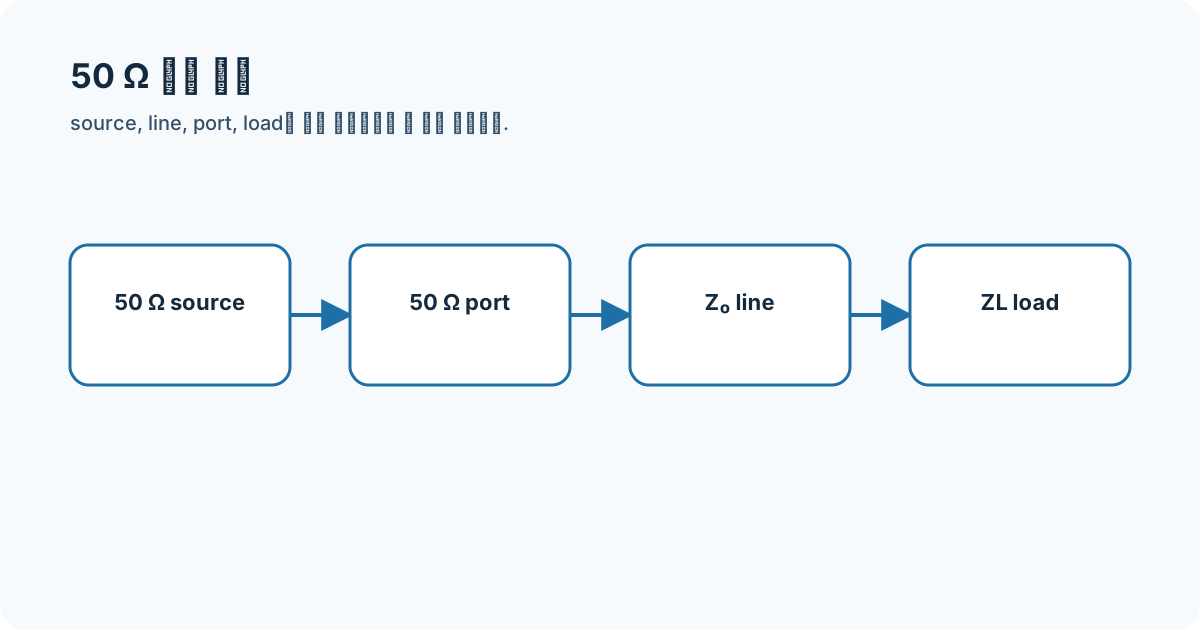
My high-frequency coursework used a 3.5 GHz, 270-degree alumina microstrip. I keep its stored dimensions separate from measurement and revisit only how effective permittivity enters the length calculation.
High-frequency engineering course hub
What I will check next
Relative permittivity alone does not fix the actual phase velocity of microstrip because fields occupy both air and substrate; the effective-permittivity model and frequency range matter.