RF · Microwave Study
Reading an Antenna as an RF Port
Rather than memorize the whole transceiver, I isolated the inputs, outputs, and role of Reading an Antenna as an RF Port.
- Sequence
- 32 / 32
- Track
- circuit-blocks
- Tools
- RF calculators
On this page
Question I started with
Rather than memorize the whole transceiver, I isolated the inputs, outputs, and role of Reading an Antenna as an RF Port.
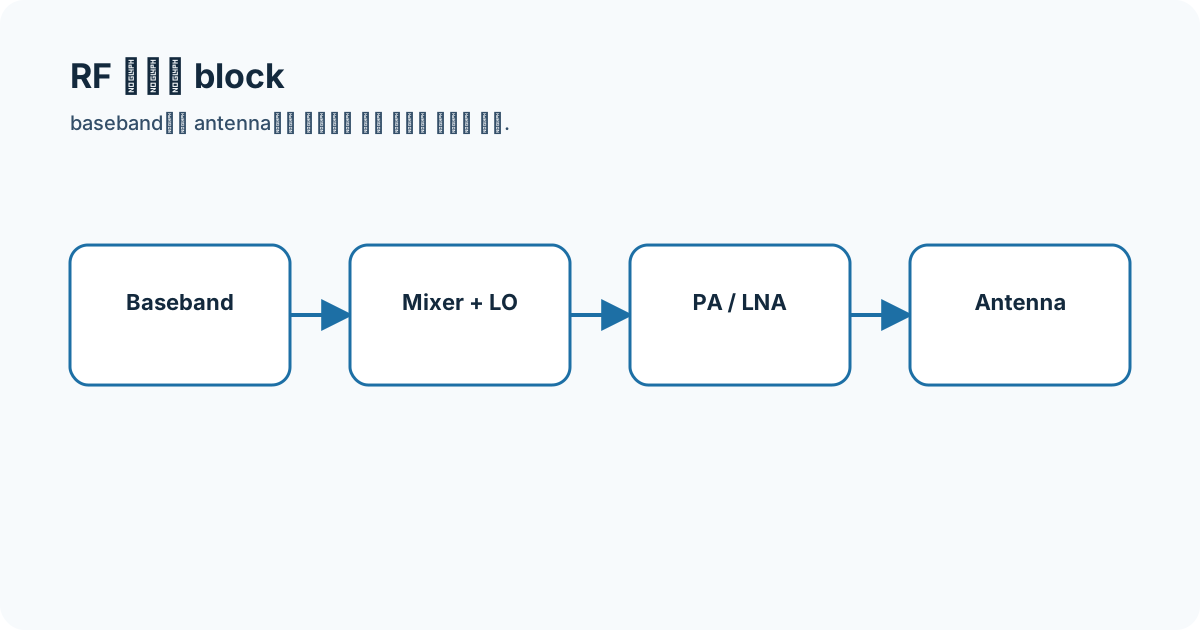
Connecting the concepts
The key is treating input match, efficiency, gain, and polarization as separate metrics. Frequency, impedance, gain/loss, noise, and linearity at both sides are recorded before connecting the block.
- Reading
- RF block
- S-parameter
- signal chain
Equations and assumptions
I write the reference impedance, units, and linear-versus-decibel domain before substituting numbers.
G = eta DP_rad = eta P_acceptedWorked example
With 10 dBi directivity and 70% efficiency, gain is about 8.45 dBi.
Connecting it to my coursework and projects
I connect this block to my passive-network coursework and FMCW transceiver flow. The example is a recomputed study value, not a hardware measurement.
High-frequency engineering course hub
What I will check next
I do not mix typical, guaranteed, and simulated conditions or directly compare values taken at different frequency, bias, temperature, power, or terminations.