RF · Microwave Study
Frequency Multipliers
Rather than memorize the whole transceiver, I isolated the inputs, outputs, and role of Frequency Multipliers.
- Sequence
- 27 / 32
- Track
- circuit-blocks
- Tools
- RF calculators
On this page
Question I started with
Rather than memorize the whole transceiver, I isolated the inputs, outputs, and role of Frequency Multipliers.
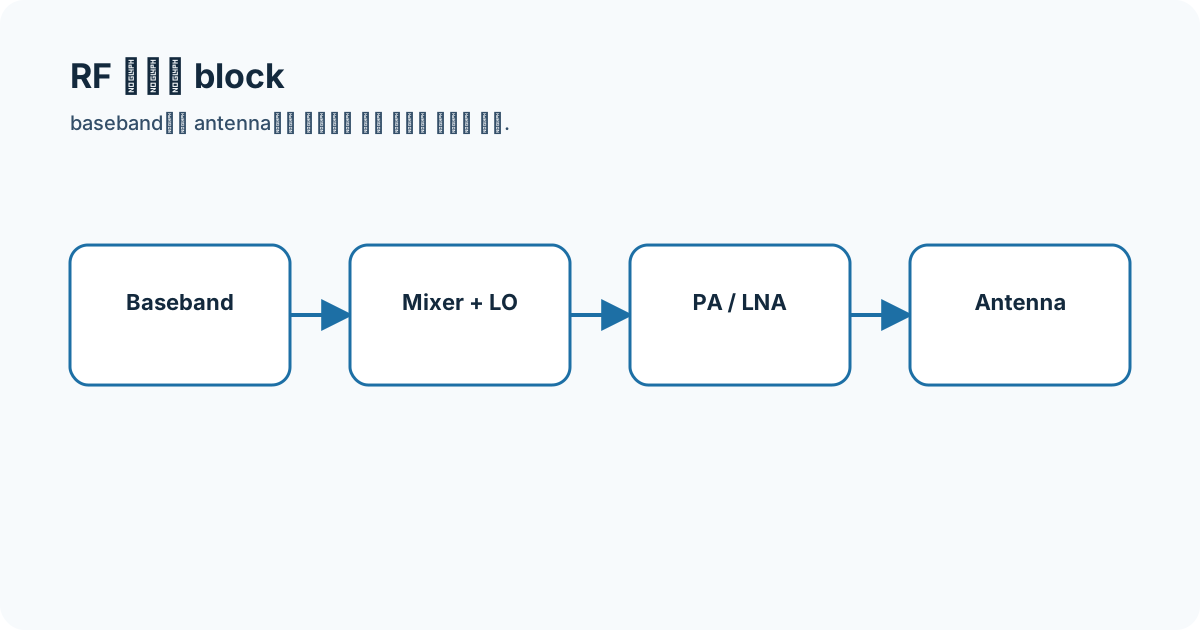
Connecting the concepts
The key is selecting one nonlinear harmonic with a filter. Frequency, impedance, gain/loss, noise, and linearity at both sides are recorded before connecting the block.
- Frequency
- RF block
- S-parameter
- signal chain
Equations and assumptions
I write the reference impedance, units, and linear-versus-decibel domain before substituting numbers.
f_out = n f_inL(f) rises approximately 20 log10(n) ideallyWorked example
The 24th harmonic of 100 MHz is 2.4 GHz, but unwanted products must be rejected.
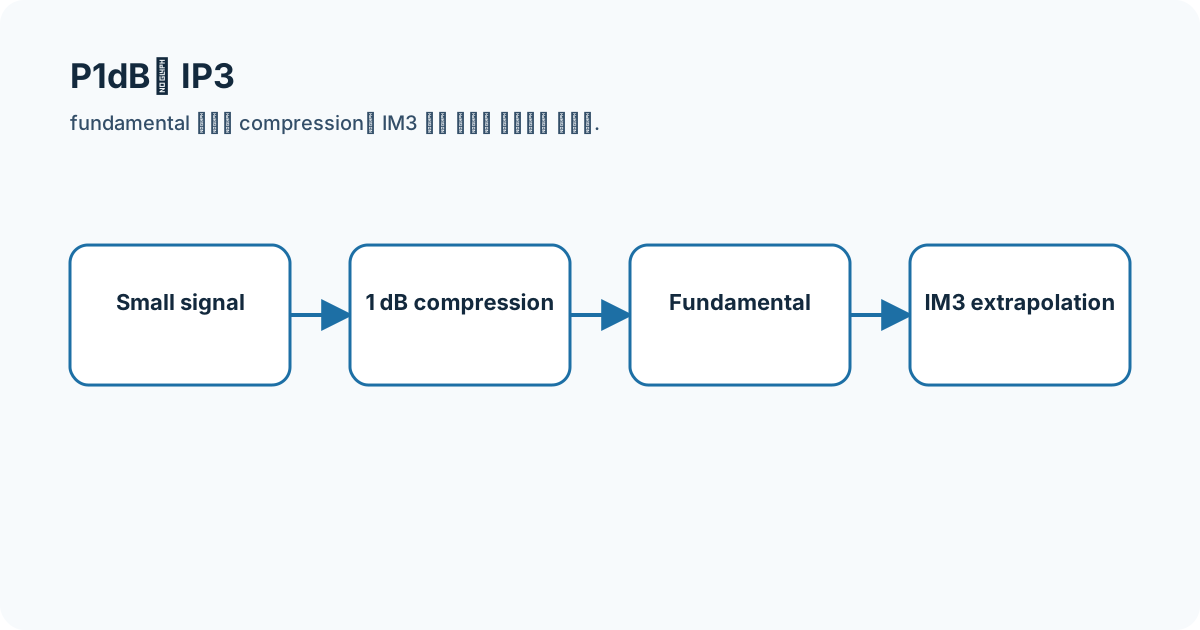
Connecting it to my coursework and projects
I connect this block to my passive-network coursework and FMCW transceiver flow. The example is a recomputed study value, not a hardware measurement.
High-frequency engineering course hub
What I will check next
I do not mix typical, guaranteed, and simulated conditions or directly compare values taken at different frequency, bias, temperature, power, or terminations.