Week 04
Controlled Rectifiers
I organize a study path from switching devices to converters and inverters while tracking power flow and device stress together.
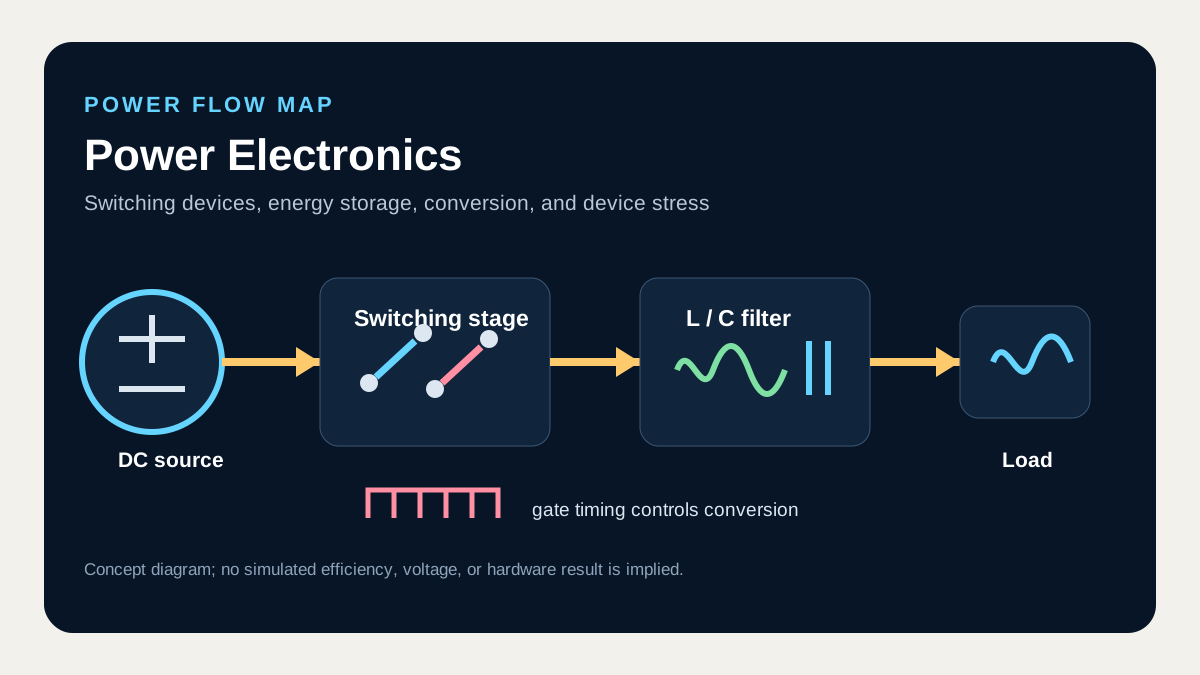
What I connect in this unit
A thyristor does not turn on from forward voltage alone; it conducts after a gate pulse at the firing angle. Delaying that pulse changes average output voltage, while commutation from one device to the next depends on load-current continuity.
Concept map
- Thyristors
- Firing angle
- Average output voltage
- Commutation
Technical anchor
With continuous current, an ideal single-phase fully controlled bridge has V_dc = (2 V_m/pi) cos(alpha), which shows why the power-flow sign changes around alpha = 90 degrees.
How I review it
Place gate sequence, minimum pulse width, allowed alpha range, and commutation overlap on one conduction table, then identify where discontinuous load current invalidates the average-voltage assumption.
Connection to the full course
Unit 4 of 12. Unit numbers follow circuit dependencies and do not claim the original lecture schedule.