Week 09
L-Matching and Stub Results
I revisit transmission lines through Wilkinson and branch-line networks using my assignments, Cadence circuits, and S-parameter figures.
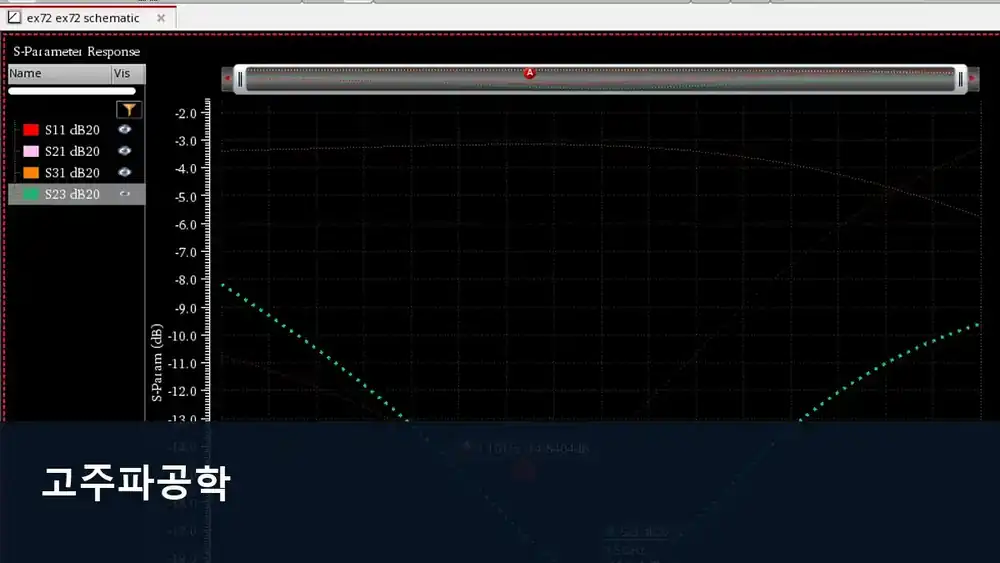
What I connect in this unit
An L-match uses series reactance and shunt susceptance to transform a load at one design frequency. In a distributed implementation, an open stub supplies the shunt susceptance, so the exact match is inherently frequency selective.
Concept map
- Series reactance
- Shunt susceptance
- Open stubs
- Design frequency
Technical anchor
Use the series element to move normalized impedance to the required conductance or resistance locus, then cancel the remaining shunt term with B. For a lossless open stub, input susceptance is proportional to tan(βl).
How I review it
At the design-frequency marker, inspect real and imaginary parts separately, then sweep a small stub-length variation to see how the S11 minimum shifts.
Connection to the full course
Unit 9 of 12. Unit numbers arrange the saved assignments and circuits by concept flow rather than attendance weeks.