Week 04
Time Response and Standard Second-Order Systems
I follow the saved course materials and calculations from modeling through stability, root locus, and frequency response.
What I connect in this unit
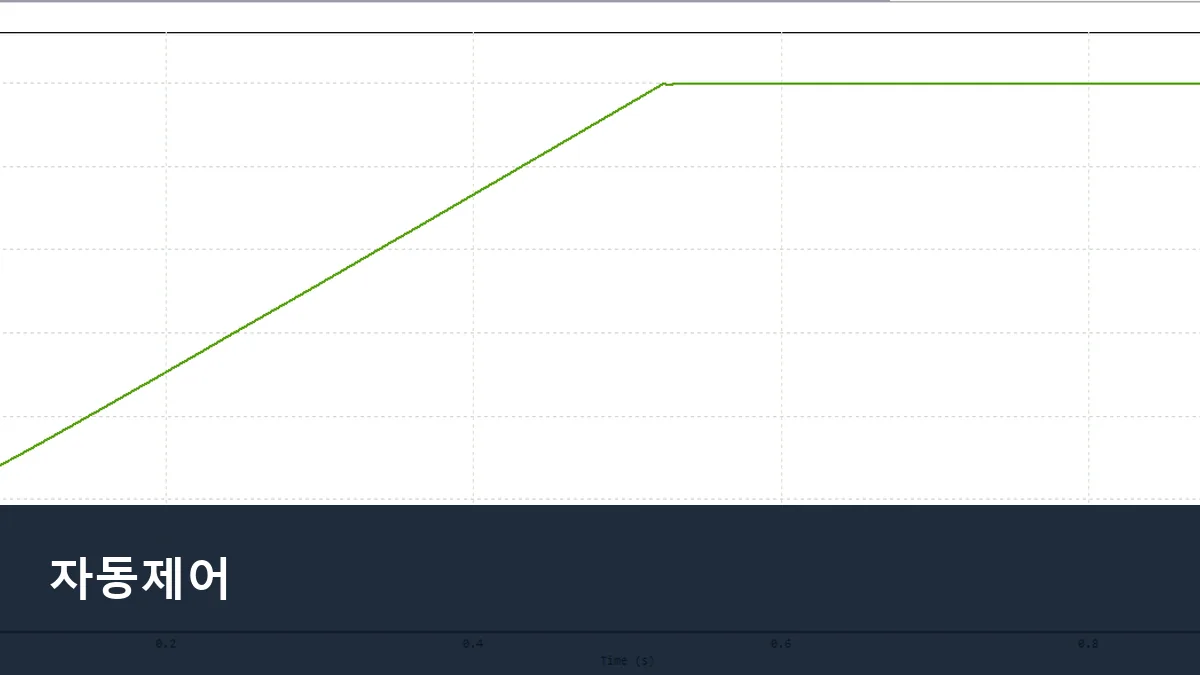
For a standard second-order system, natural frequency and damping ratio jointly determine rise time, overshoot, and settling time. Pursuing speed alone can reduce damping and increase overshoot, so the time-domain measures must be read from the same step-response curve.
Concept map
- Step response
- Rise time
- Overshoot
- Settling time
Technical anchor
Match the denominator to s^2+2ζωn s+ωn^2. For 0<ζ<1, Mp=exp(-πζ/sqrt(1-ζ^2)) connects pole location to peak overshoot.
How I review it
Mark the 10–90% rise interval, first peak, and settling band separately on a step plot so that the response-time definitions are not mixed.
Connection to the full course
Unit 4 of 12. Unit numbers organize the concepts found in the materials and do not reproduce an attendance schedule.