RF · Microwave Study
Re-reading Cadence L-Matching and Stub Screens
I used the RFDH Smith-chart notes to revisit re-reading my stored Smith trajectory by design frequency and component order with a hand calculation and my own diagram.
- Sequence
- 22 / 32
- Track
- smith-chart
- Tools
- RF calculators
On this page
Question I started with
I used the RFDH Smith-chart notes to revisit re-reading my stored Smith trajectory by design frequency and component order with a hand calculation and my own diagram.
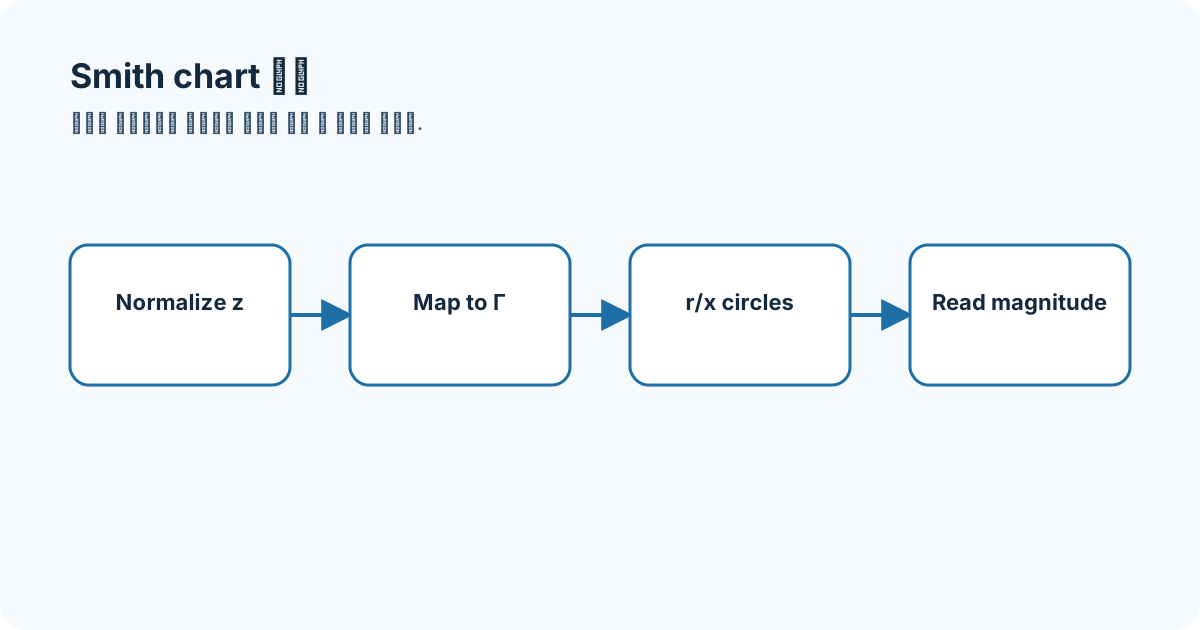
Connecting the concepts
The key is re-reading my stored Smith trajectory by design frequency and component order. Before reading coordinates I record Z0, frequency, and impedance/admittance mode, then label each element or line-length move.
- Smith chart
- normalized impedance
- reflection coefficient
- matching
Equations and assumptions
I write the reference impedance, units, and linear-versus-decibel domain before substituting numbers.
Gamma_in = S11RL = -20 log10(abs(S11))Worked example
S11=−20 dB implies |Γ|=0.1, but marker frequency must also be checked.
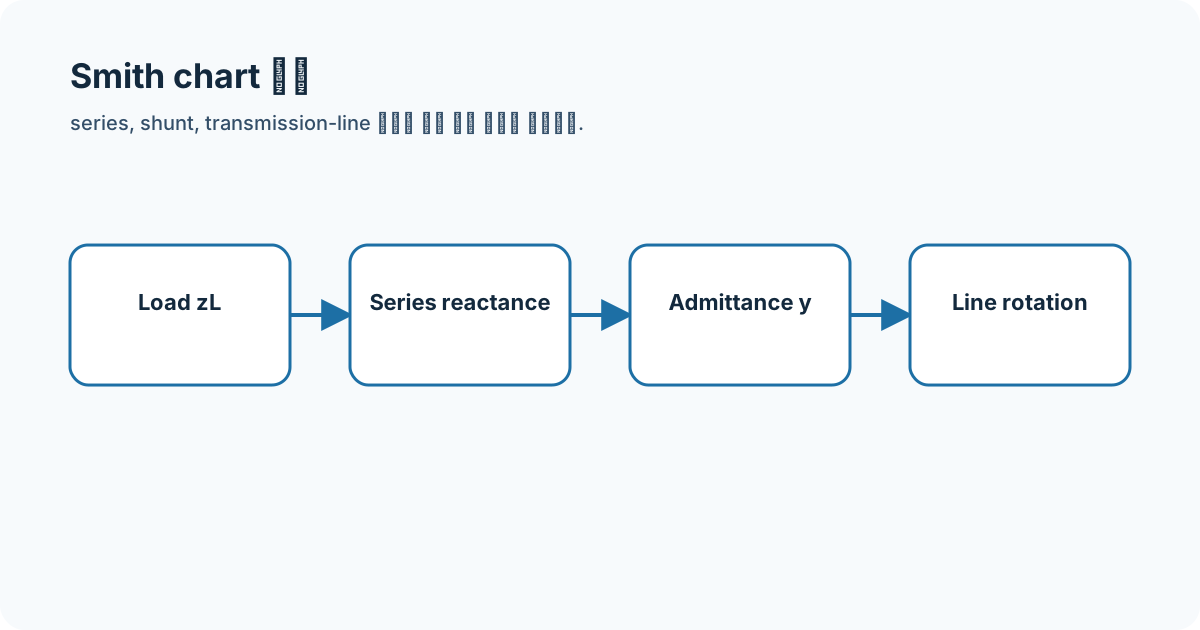
Connecting it to my coursework and projects
I use this order when reading my stored L-section and single-stub screens. The trajectory is an archived simulation view, not a current rerun.
High-frequency engineering course hub
What I will check next
Visual chart readings may differ slightly from calculated values. A matching answer is incomplete without normalization, wavelength direction, and open/short-stub type.