Week 11
Power Amplifier Output Stages
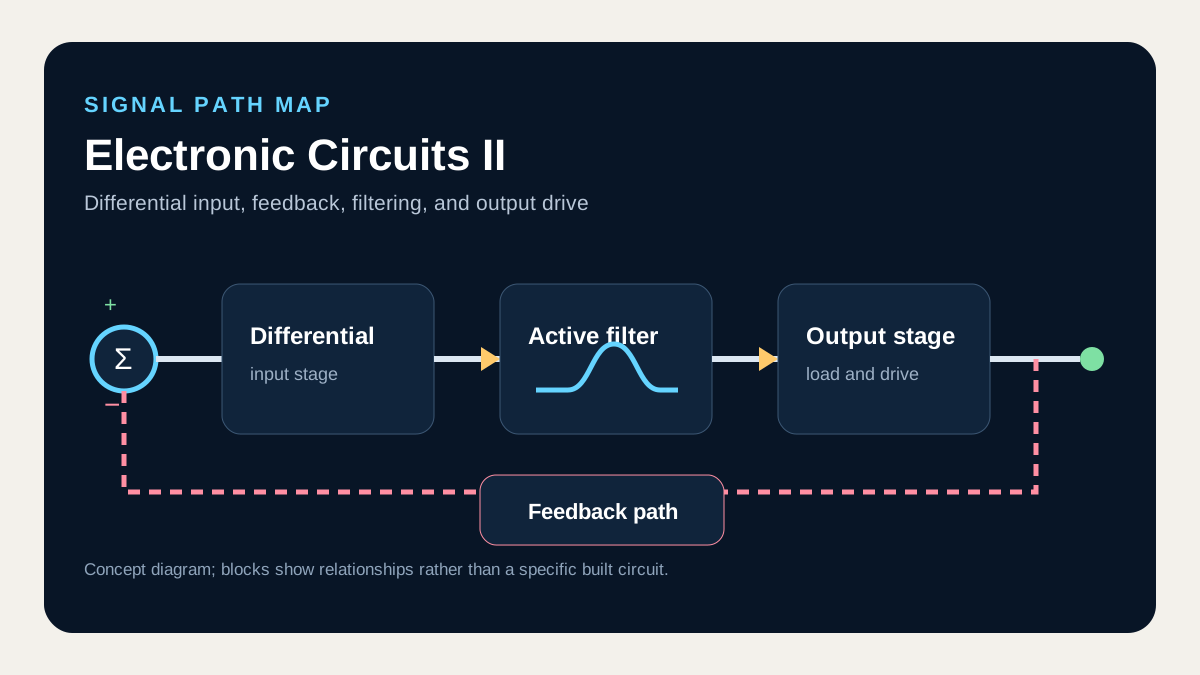
I study differential stages, feedback, filters, and output stages as one connected signal path.
What I connect in this unit
Class A conducts for the full cycle and favors linearity at the cost of efficiency and heat. Class B splits half-cycles between devices but creates crossover distortion, while Class AB bias reduces the zero-crossing dead zone.
Concept map
- Class A
- Class B and AB
- Crossover distortion
- Efficiency and heat
Technical anchor
An ideal resistively loaded Class B push-pull stage has maximum efficiency π/4 ≈ 78.5 percent, reduced in practice by quiescent and device losses.
How I review it
Use output voltage and current peaks to calculate load and DC input power, then inspect an expanded zero-crossing waveform for underbias or excessive quiescent conduction.
Connection to the full course
Unit 11 of 12. Unit numbers follow concept dependencies rather than the historical lecture calendar.