Earlobe PPG
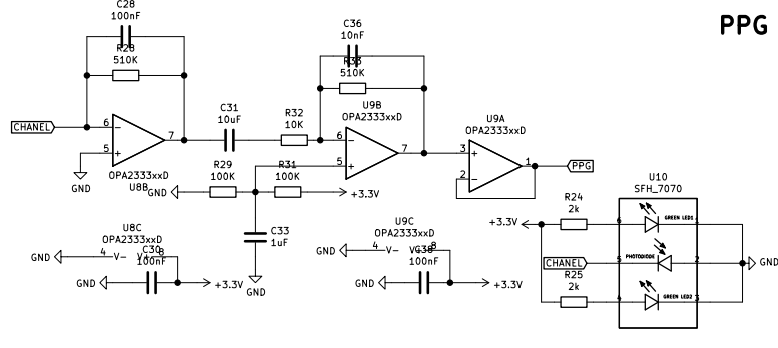
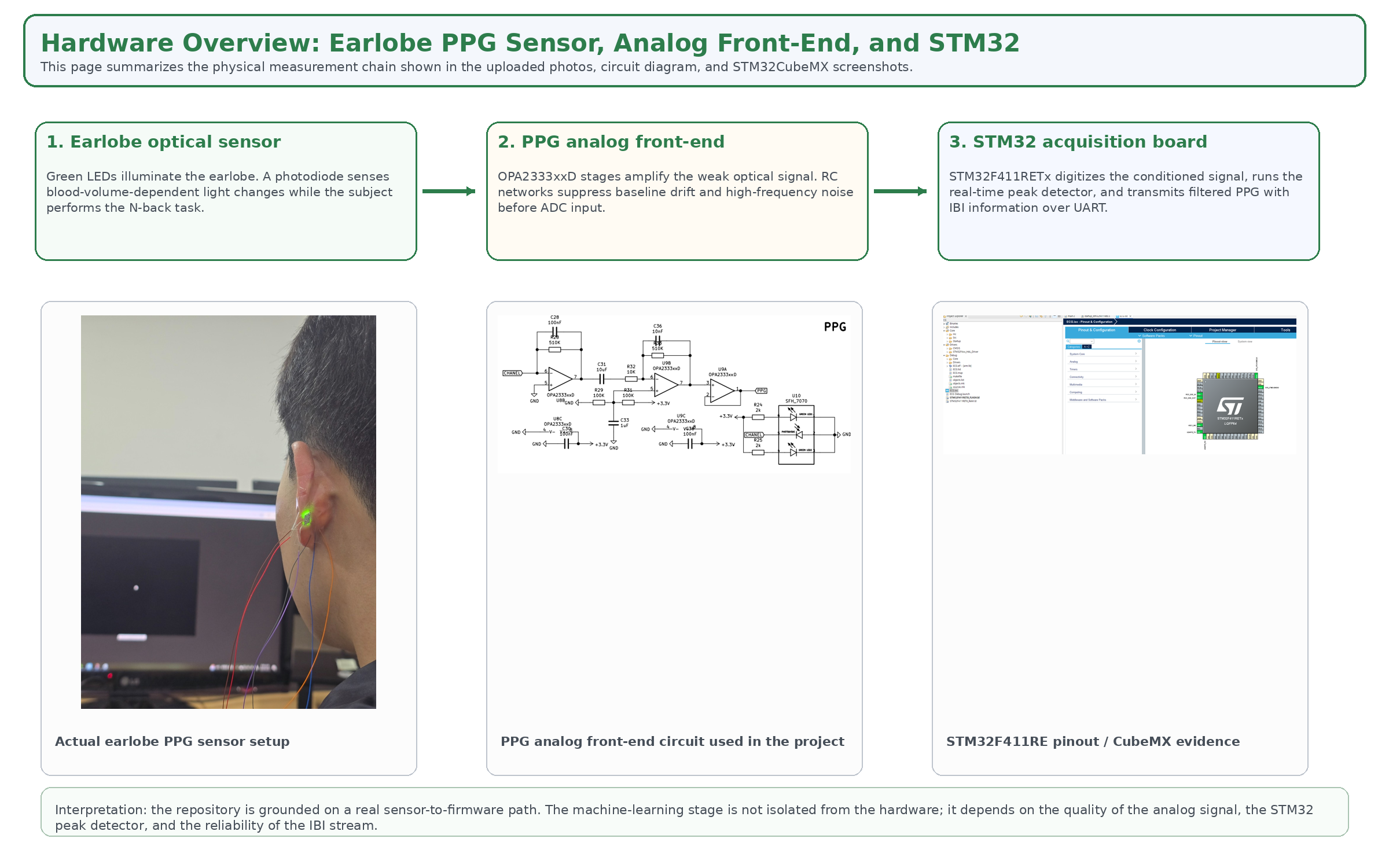
The analog amplification/filtering path and STM32 ADC connection are supported by circuit and system-architecture evidence.
Embedded Biomedical AI · End-to-End Case Study
A traceable engineering pipeline connecting an earlobe PPG analog front end, STM32F411 real-time processing, IBI/HRV feature generation, and CNN–Transformer evaluation.
01 · System
Every boundary that converts an analog pulse into a digital feature is documented. Circuit, firmware, Python pipeline, and stored results link directly to repository evidence.
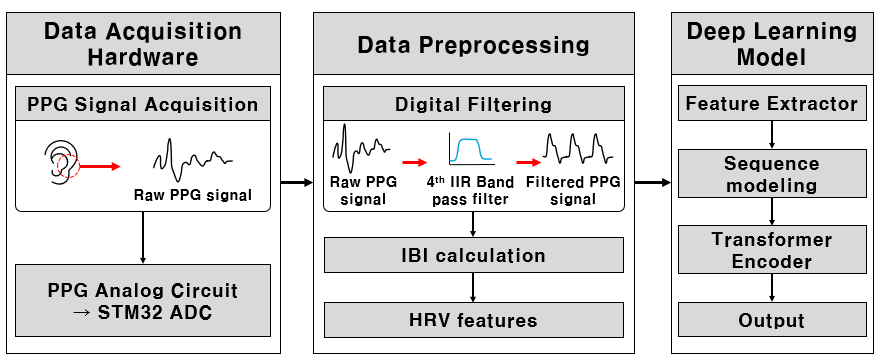
The analog amplification/filtering path and STM32 ADC connection are supported by circuit and system-architecture evidence.
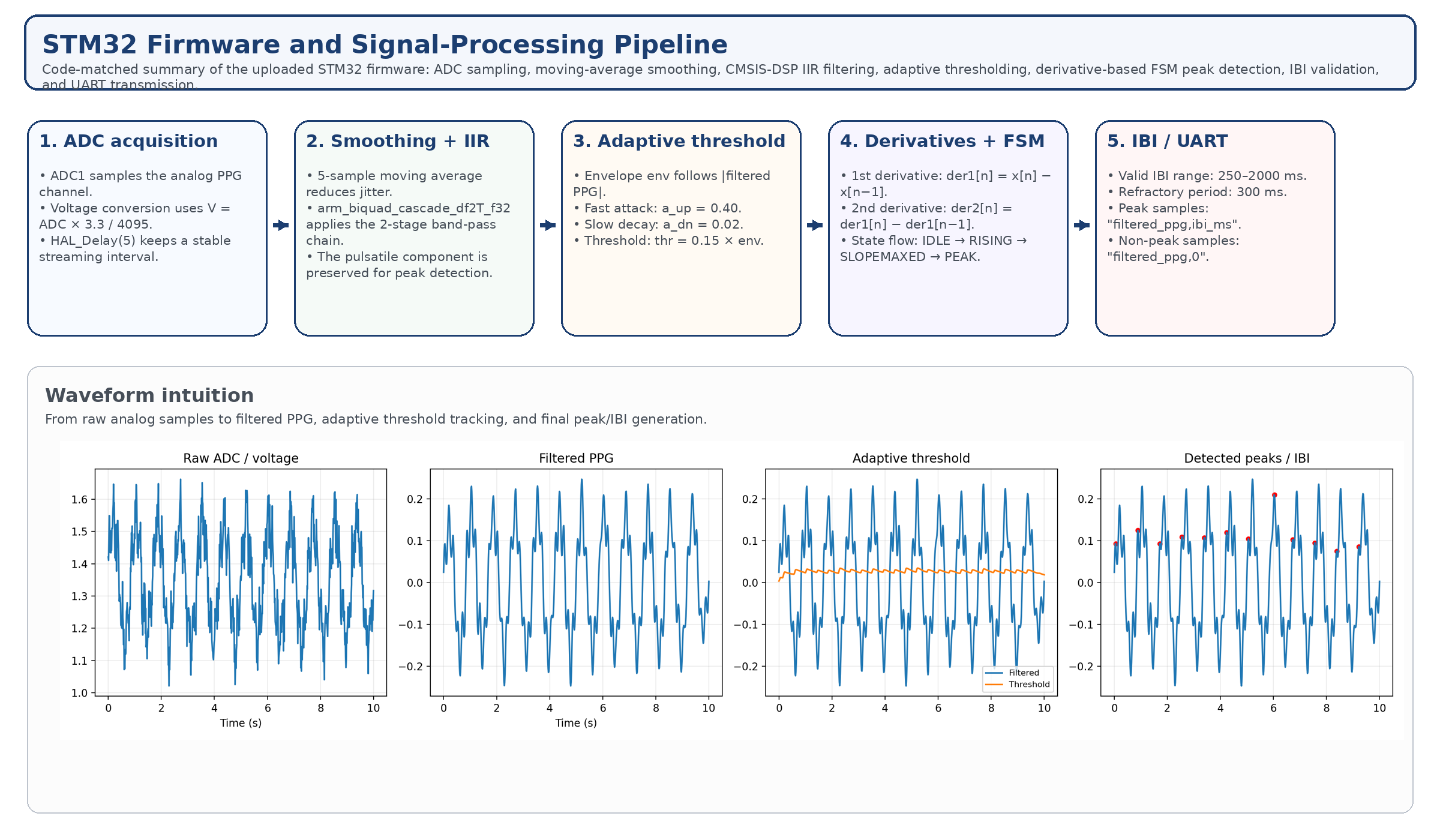
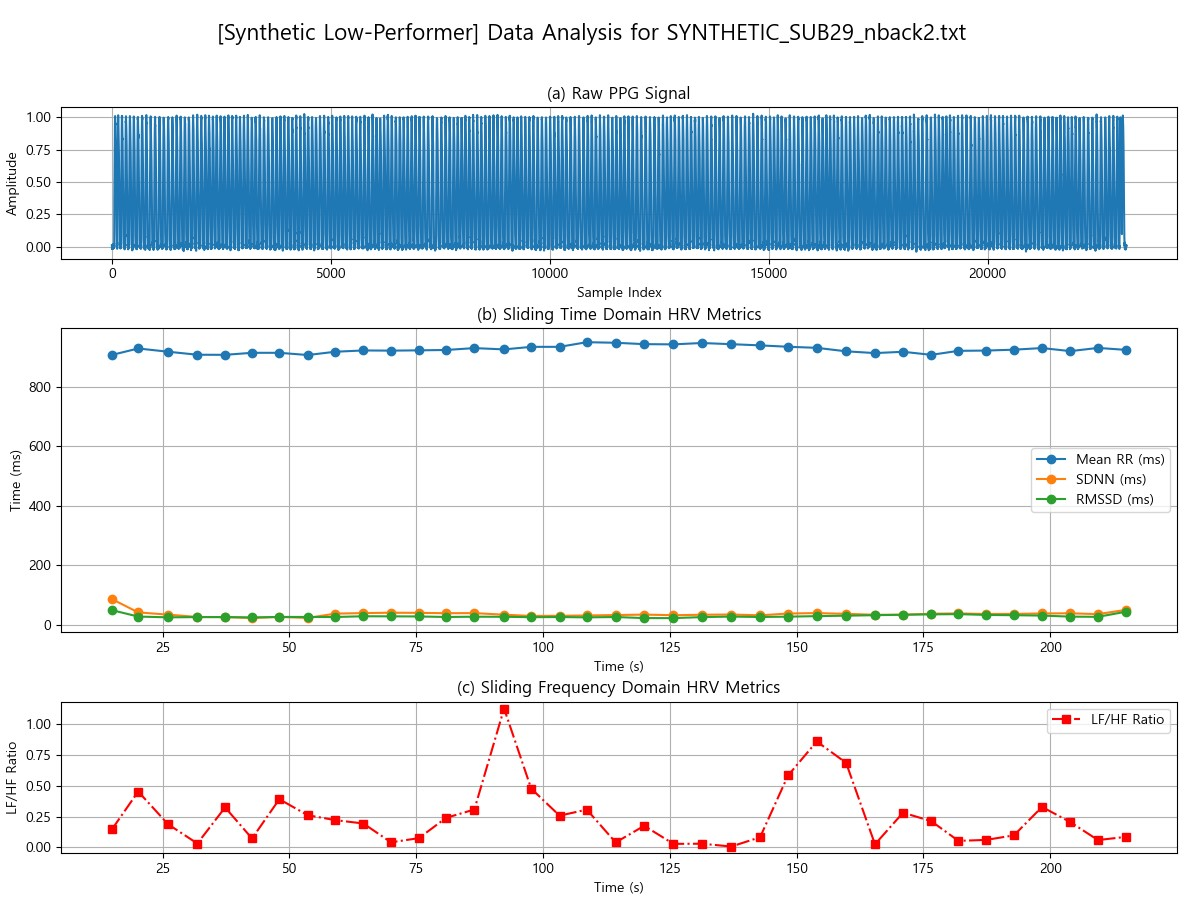
Moving average, IIR band-pass, adaptive thresholding, and a derivative FSM produce peak and IBI events for UART transmission.
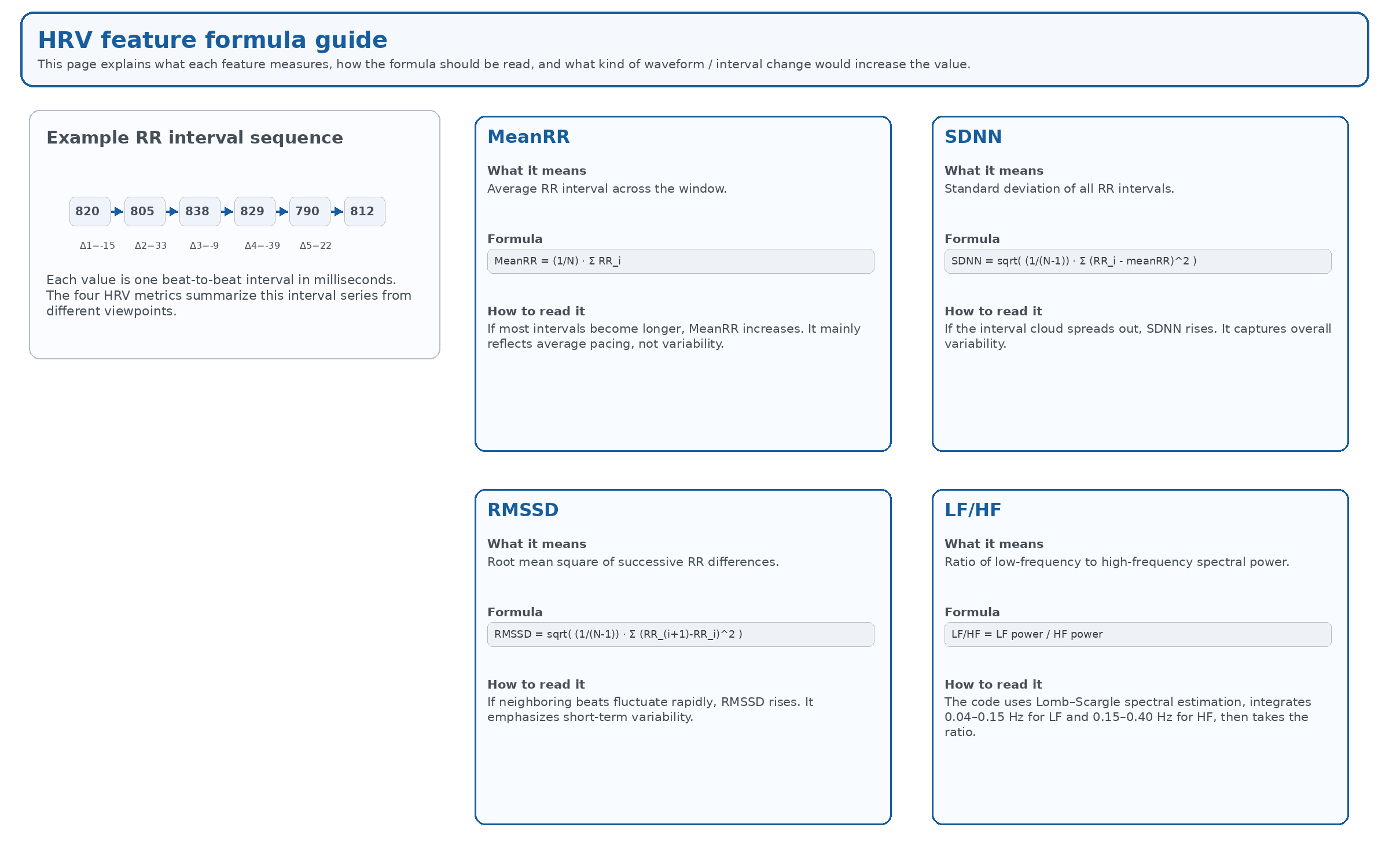
Windowed features are standardized; CNN local patterns and Transformer long-range relationships support High/Low classification.
02 · Signal Pipeline
The firmware path from ADC samples to heartbeat intervals is separated from the data path that turns those intervals into model-ready HRV tensors.
03 · Model
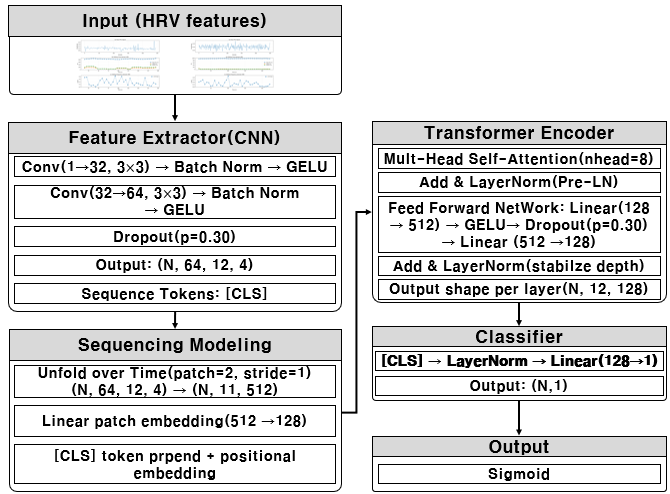
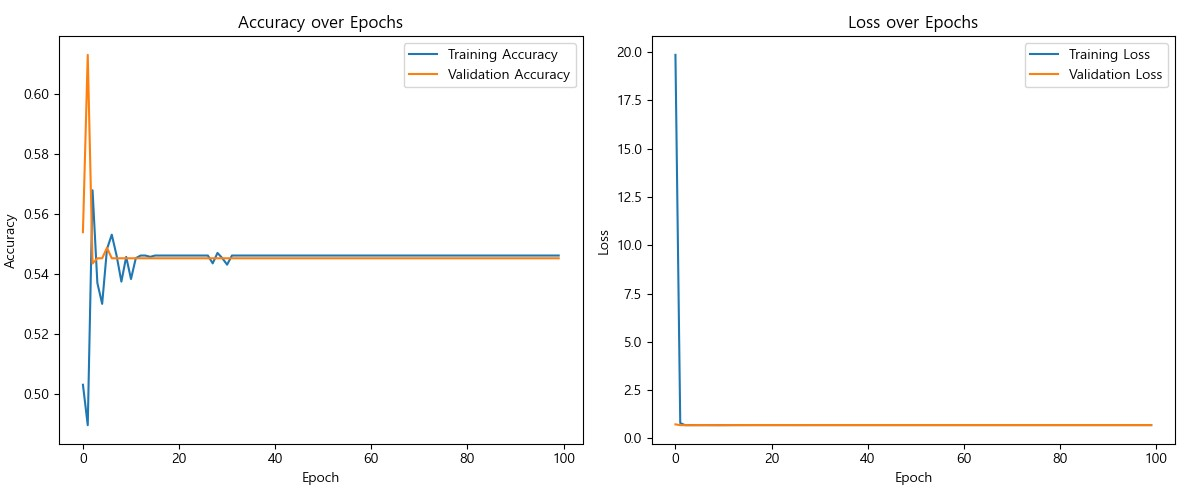
The CNN compresses local patterns in HRV features; patch embedding and self-attention model dependencies across windows. All headline metrics on this page are calculated from the stored CSV.
04 · Evidence
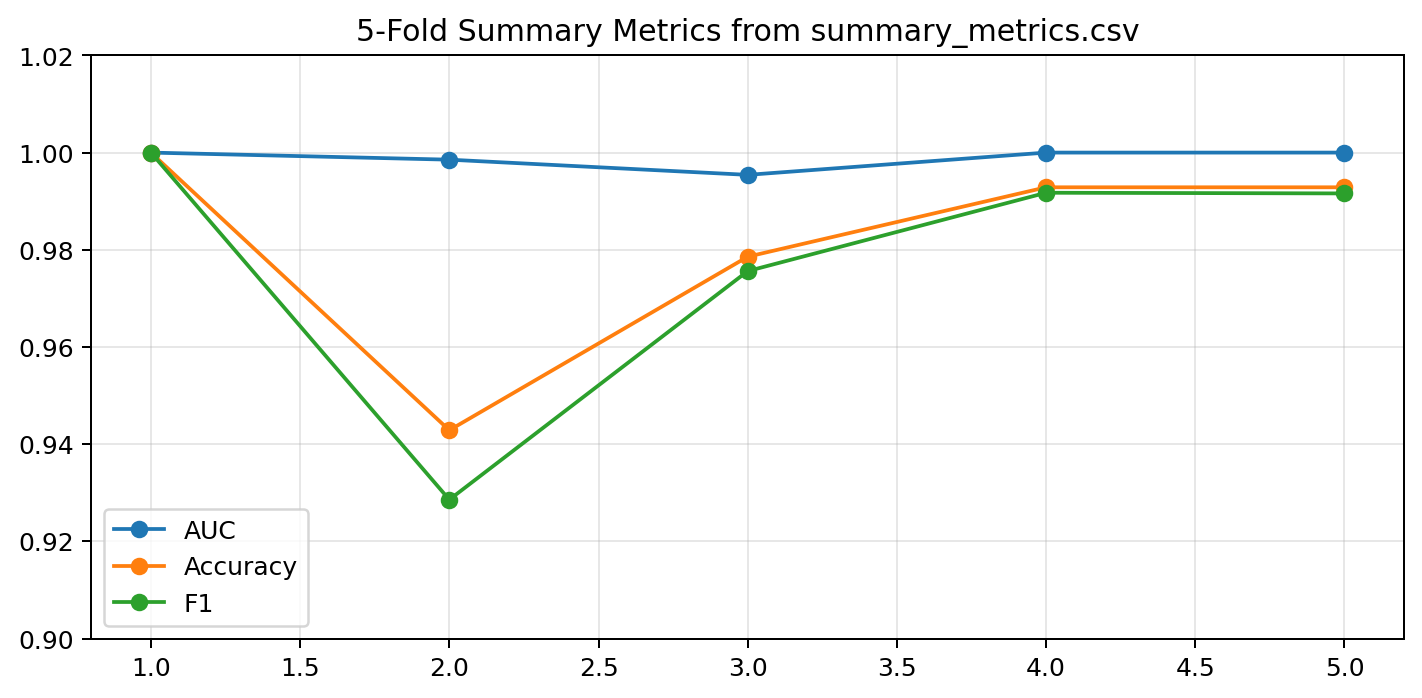
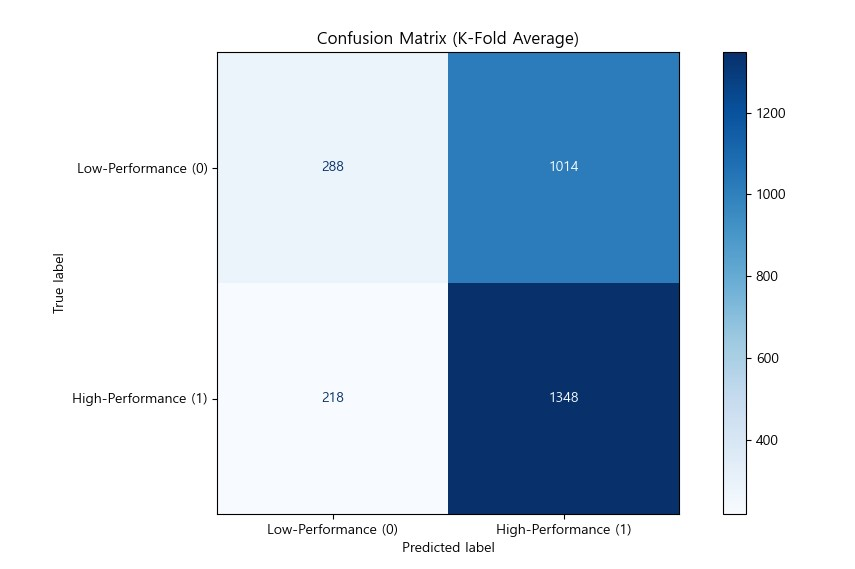
The code archive's five-fold outputs and the paper summary use different evaluation conditions and are therefore reported separately.
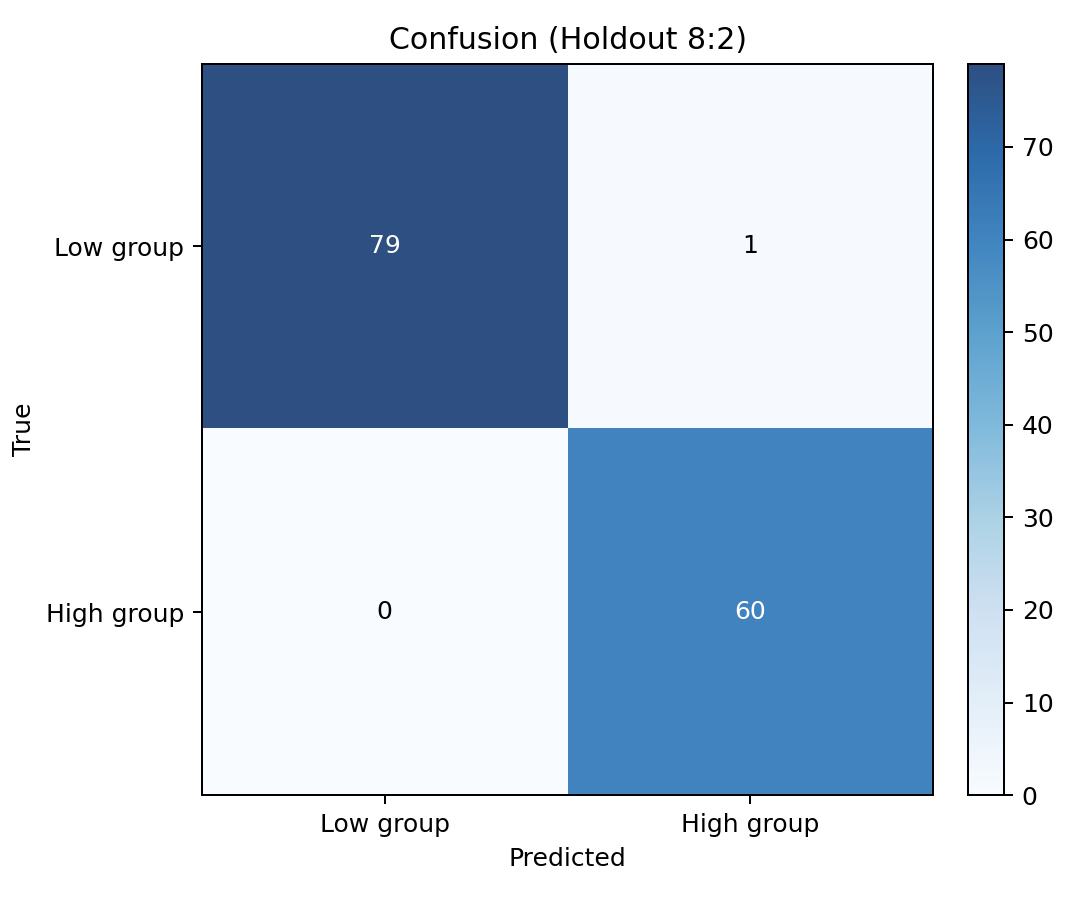
Source audit · Aggregate only
Only group- and fold-level results from the supplied research archive are public. Raw participant PPG, identifiable subject screens, and individual N-back captures remain withheld.
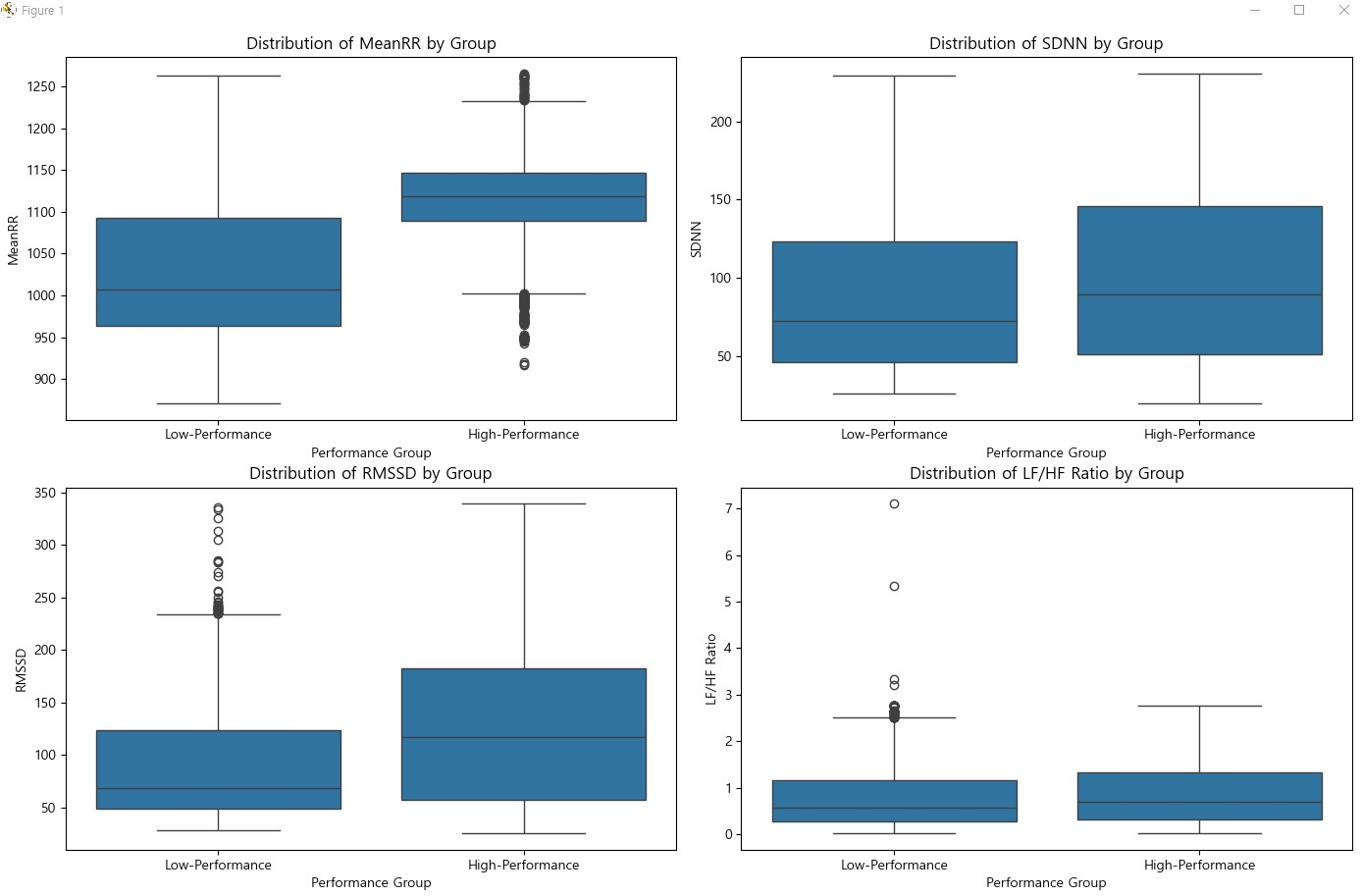
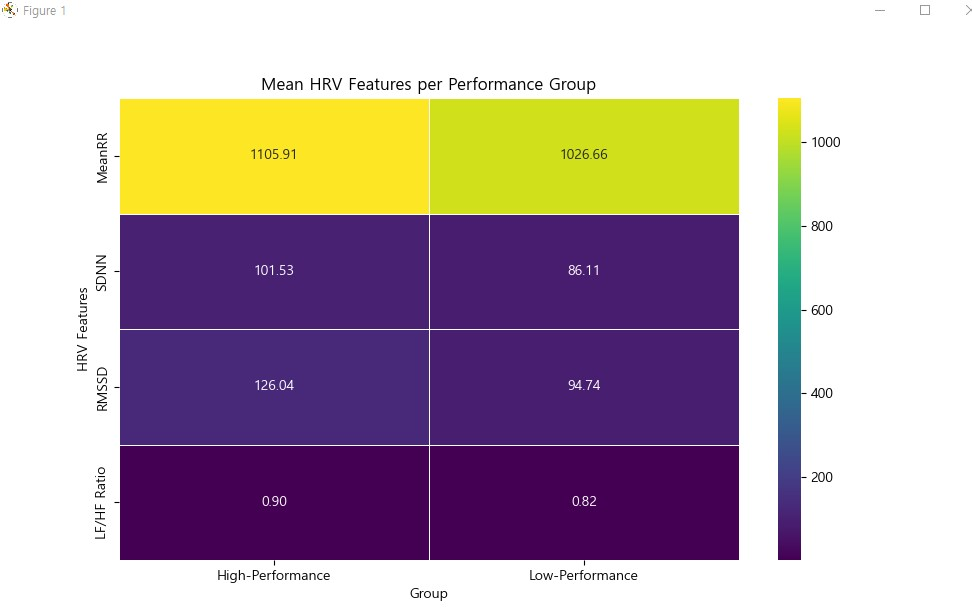
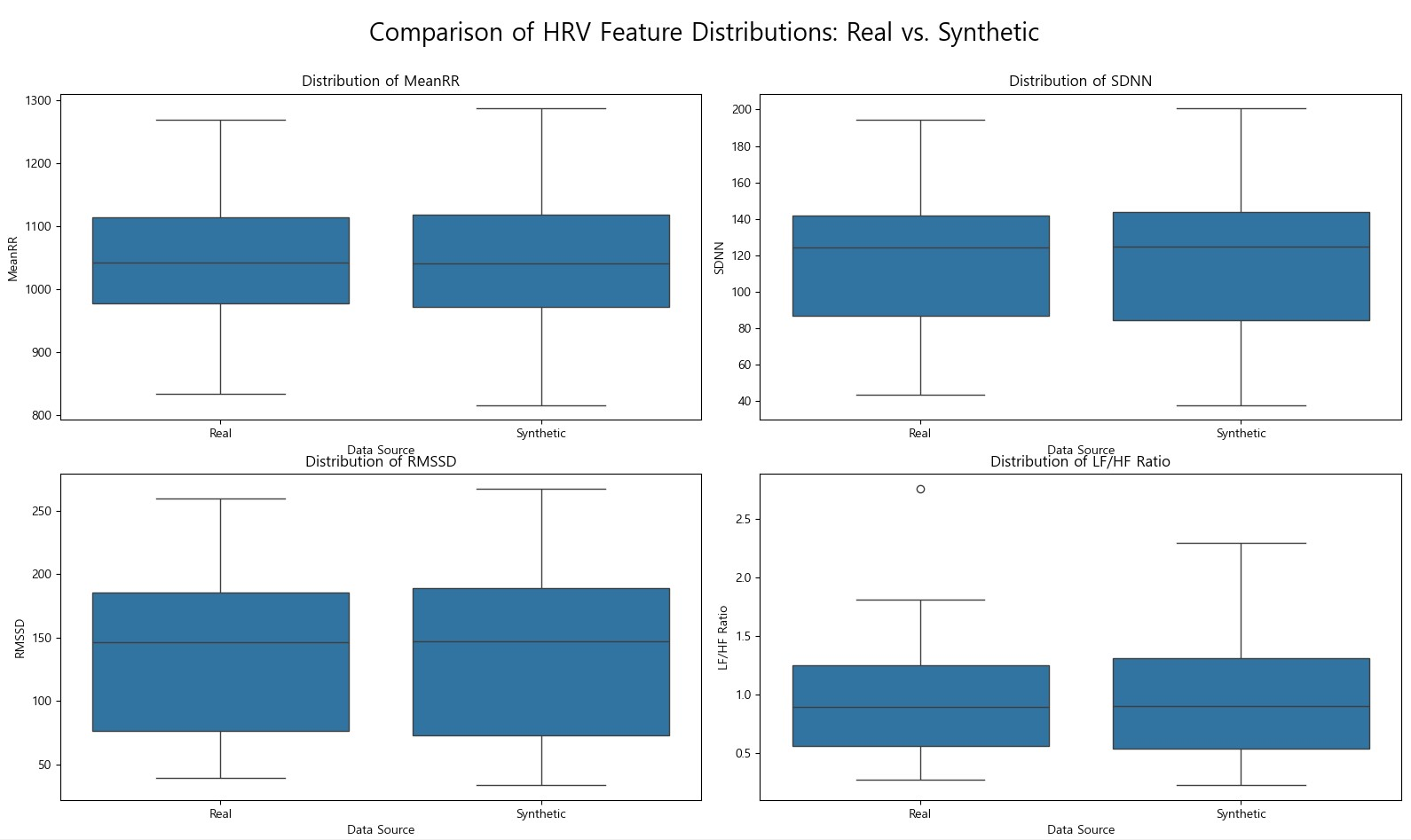
| Evidence | ROC-AUC | Accuracy | F1 | Interpretation |
|---|---|---|---|---|
| Code archive, five-fold mean | 0.9988 | 0.9814 | 0.9775 | Arithmetic mean of the five stored fold rows |
| Paper summary | 0.85 | — | 0.82 | Separately reported paper conditions; not directly compared |